Posted in Family Stories

Eight Years Without Her

Today marks eight years since my mother’s death.

Even writing that sentence feels unreal.

Her passing came unexpectedly. It shook something deep inside me. It shifted parts of my life I didn’t even realize stood on her presence. At the same time, it has grown me in ways I never anticipated. Grief has a way of doing both—breaking you open while quietly reshaping you.

Over the last eight years, my life has changed in so many ways. I’ve moved three times. I bought a house with my sister. I watched one of my daughters get married. I became a grandmother.

Life kept moving forward.

But even now, in the stillness that follows loss, I feel the weight of what’s missing in a way I didn’t expect.

And strangely, as my granddaughter Sophia grows, I miss my mom more—not less.

I See Her Everywhere

The more I watch my daughters and my granddaughter, the more I see my mother.

Not in big, obvious ways—but in small, deeply familiar moments that stop me in my tracks.

Shelby’s quick sarcasm and sharp sense of humor remind me of her constantly. That wit—fast, effortless, and perfectly timed—lives on in her.

Emilie carries something different. She moves through motherhood with a calm, steady presence that feels so familiar. My mom mothered us naturally. She didn’t force it. She didn’t overthink it. She simply was a mother in every sense of the word.

And now, Emilie carries that same instinct with Sophia.

It’s beautiful to witness.

And then there’s the snark.

Both Emilie and Sophia already show it in their own ways, and I can’t help but smile when I see it. That little spark, that edge—that’s her too.

Grief does something unexpected here. It doesn’t just remind me that she’s gone. It shows me that parts of her remain.

I Miss Her Sense of Humor

My mom had a way of making people laugh without trying too hard.

She didn’t need to be the center of attention. She didn’t force jokes. Her humor came naturally, often with a hint of sarcasm and perfect timing.

I miss that.

I miss the way she could lighten a heavy moment. I miss the shared looks, the inside jokes, the way laughter would just happen when she was around.

Now, I catch glimpses of that same humor in my girls, and it brings both comfort and ache.

Comfort, because I still get to experience it.

Ache, because I know exactly where it came from.

I Miss Her Wisdom

There’s a certain kind of loss that comes when you no longer have someone to call for advice.

My mom always knew what to say.

Not in a rehearsed or polished way—but in a grounded, instinctive way that came from experience and intuition.

She called it “a feeling.”

And that feeling? It was never wrong.

When I didn’t know what to do, I went to her. When I stood at a crossroads, I talked it out with her. She helped me sort through the noise and find clarity.

Now, I still find myself thinking “I’ll talk with Mom about this”.

And then I remember.

That space—that gap—that’s where I feel her absence the most.

I Miss Her Stories

My mom loved to tell stories about her childhood.

She was a true daddy’s girl.

I never had the chance to know my maternal grandfather, but through her stories, I felt like I did. She painted such a vivid picture of him—his personality, his presence, the way he loved her.

Honestly, I suspect if he had been alive when we were born, he would have spoiled us completely.

Through her, I got to know his spirit.

And now, I realize something important:

Those stories weren’t just memories. They were a bridge—connecting generations, passing down identity, preserving legacy.

I miss hearing them from her voice.

I Miss the Music

Music filled so many moments of my childhood.

Long car rides. Windows down. Radio on.

And my mom singing—always just a beat behind the song.

Every time.

It didn’t matter what was playing. She sang along anyway.

Recently, on a long drive to see my granddaughter, I heard Helen Reddy’s “I Am Woman” come through the speakers.

And just like that, I wasn’t driving anymore.

I was a passenger again. Sitting next to my mom on that old bench seat. No seatbelt. No worries. Just music and presence.

How did we survive those days? Honestly, I have no idea.

But what I do know is this: music carries memory in a way nothing else can.

And in that moment, she felt so close.

I Miss Her Comfort

When life hit hard, my mom didn’t rush to fix things.

She didn’t jump straight into solutions.

She let me cry.

She believed in release before resolution.

We would sit together, and I would cry—sometimes quietly, sometimes not so quietly. And she never tried to stop it.

She understood that some pain needs to come out before it can be talked through.

Later, we would sort through the problem. Later, we would find direction.

But first—we felt it.

I miss that.

I miss having a place where I didn’t need to hold it together.

The Things I Wish She Could See

There’s so much I wish she were here to experience.

Especially Sophia.

Oh, the relationship they would have had.

I can picture it so clearly—the songs they would sing together, the laughter they would share, the bond they would build.

Sophia already loves music. She loves to sing.

So now, I find myself holding onto every song I can remember.

I replay them in my mind. I hum them under my breath. I try to keep them alive so I can pass them down.

Because even though my mom isn’t here physically, her legacy doesn’t end.

It continues.

Through stories.
Through music.
Through personality.
Through love.

Holding Grief and Gratitude Together

I could keep going.

There’s so much more I miss.

But here’s what I’m learning:

Grief doesn’t erase what was—it reveals how deeply it mattered.

And alongside the grief, gratitude rises.

Gratitude for the kind of mother she was.
Gratitude for the way she shaped me.
Gratitude for the pieces of her I still see every single day.

Eight years in, I don’t have it all figured out.

I still feel the shock.
I still feel the ache.
I still reach for her without thinking.

But I also see her—everywhere.

And somehow, that makes this loss both heavier… and a little more bearable at the same time.

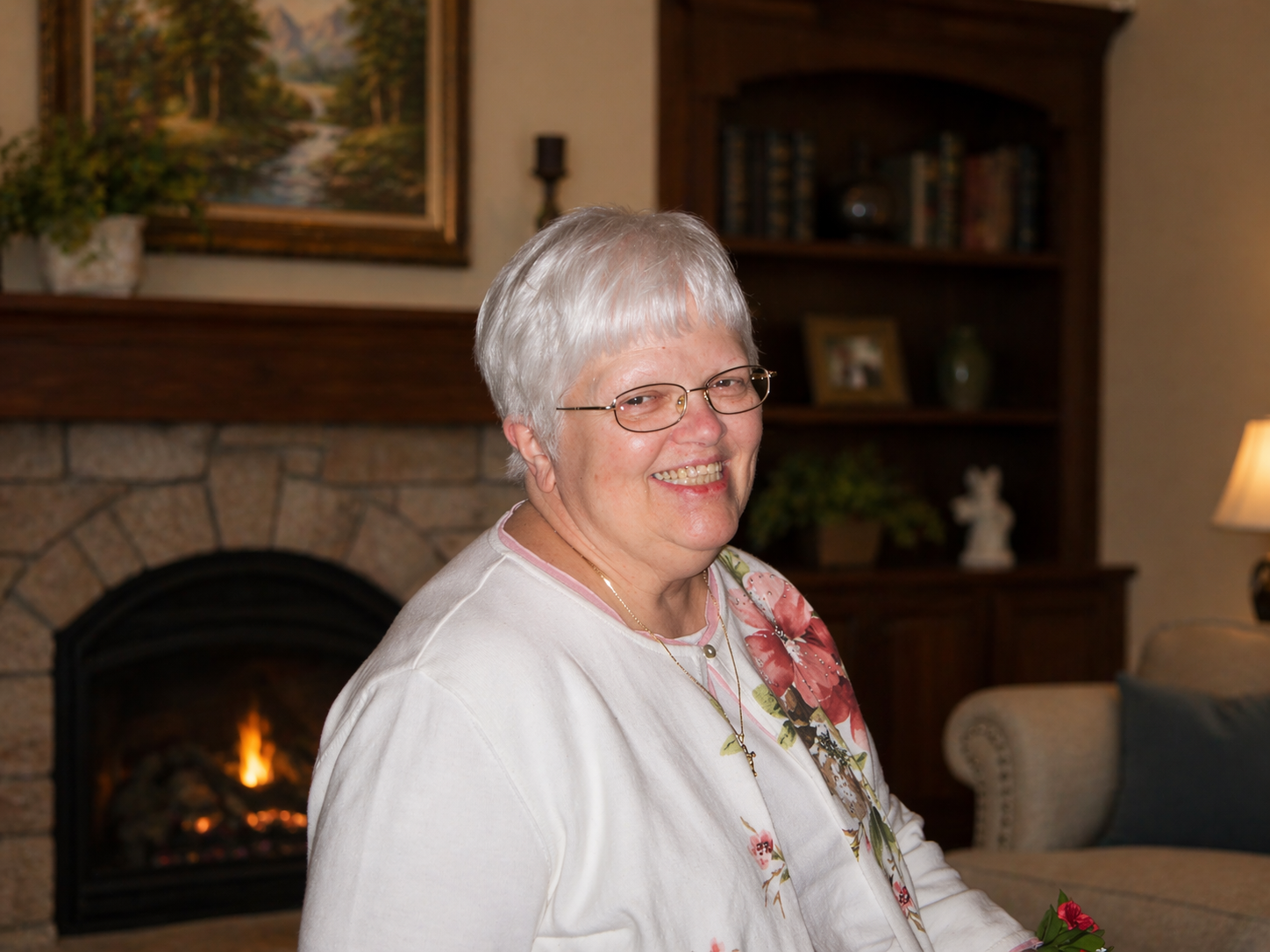
Photo by @vikkilynnsorensen. All rights reserved.
Posted in Family Stories

The Generation That Survived

One of my favorite things in the world is listening to my dad talk about his past.

At 90+ years old, he has a lot of past to talk about.

When he tells his stories, I feel like I’m stepping into another world—one that looks nothing like the one we live in today.

A Boy From Sicily

My dad was born in the small town of Calascibetta, Sicily—a stunning ancient town with panoramic views that look like something straight out of a postcard.

History doesn’t sit in books there. It surrounds you. Stone streets wind through the town. Old churches stand where they have stood for centuries. The hills overlook landscapes that have watched generations live, struggle, and move on.

My father entered a world that feels almost unimaginable now.

Children ran freely through the streets without constant worry. Families grew and prepared their own food. Nobody stared at phones because phones as we know them didn’t exist. Life moved to the rhythm of church bells, hard work, fresh air, and family.

A Complicated Love Story

My grandparents entered marriage through arrangement, not romance.

My grandmother actually loved another man. Her brothers forbade the relationship and forced her into marriage with my grandfather instead. The man she loved never married anyone else.

Not every love story gets a happy ending. Life in those days rarely allowed room for romantic dreams.

My grandfather built his life through relentless work. Long before anyone used the word entrepreneur, he ran businesses and often traveled to America for work.

His absence left my grandmother and father alone much of the time.

War Changes Everything

Then World War II arrived.

Suddenly my grandmother and father truly stood alone.

They faced the war. They faced hunger. And they faced the Nazis.

Their home in Calascibetta sat on land that offered military advantage because of its elevation and panoramic views. Authorities forced them out. My grandmother and father retreated to the countryside and built a fragile life there, surviving however they could.

The Seamstress Who Saved Their Lives

My grandmother possessed extraordinary skill as a seamstress.

She spent exactly one day in school before telling her father she didn’t like it. Instead of arguing, he apprenticed her to a seamstress.

That decision saved their lives years later.

She sewed constantly—dresses for wealthy women, linens for the church, anything that would bring a little money or food. Her hands kept my father alive when times grew desperate.

But her lack of education created other problems.

Passport officials repeatedly demanded extra payments to process paperwork for her and my father to leave Sicily and join my grandfather in America. Those delays trapped them in Sicily during the war.

A Mother’s Fierce Protection

When they finally secured passage to America, my grandmother faced another obstacle.

The ship separated men and women.

My grandmother refused to let her only child out of her sight.

She hid my father—then a preteen—among the women on the boat and kept him there for the entire journey. Rules didn’t matter. Her job was protecting her son.

And she did.

The Man Those Years Created

Those early years shaped my father forever.

Even now, the habits remain.

He walks everywhere—because as a boy he ran everywhere.

He eats whatever sits on the table—because he remembers real hunger.

He speaks about his mother with deep love and respect for the woman who protected him during a war.

Sometimes he tears up when he remembers those years.

And through everything, he loves his family fiercely and holds tightly to the faith that carried him through darkness.

The Secret to Living a Long Life

At 92 years old, my father believes he has discovered the secret to longevity.

According to him, the formula is simple:

Walk every day.
Drink an espresso every morning.
Enjoy a glass of wine whenever possible.

And always practice moderation.

He delivers this advice with the authority of someone presenting peer-reviewed research.

Honestly, I’m inclined to believe him.

The War Never Fully Leaves

After my mother passed away, I discovered a note my father had written to her just ten years after World War II ended.

That note made me think deeply about the life they built together.

As a first-generation American, I grew up hearing how the war affected America.

My father experienced the war from the other side.

He ran for shelter during bombings. He sat inside bomb shelters. When the attacks of 9/11 happened, those memories resurfaced immediately.

War leaves marks that never fully disappear.

Why I Keep Listening

My father sometimes repeats the same stories.

And I listen every time.

Because his generation survived things most of us will never experience.

Because those voices are slowly fading.

Because every retelling reveals a new detail—a new lesson—a new piece of wisdom.

I ask endless questions. I try to picture his childhood in Sicily and the enormous transition he faced when he came to America, a country he never wanted to leave his homeland for.

Yet over the years he has traveled across the United States and learned to appreciate its beauty.

America is young compared to Sicily.

But beauty still lives here.

Why These Stories Matter

It breaks my heart when younger generations dismiss the stories of their grandparents.

My parents’ generation lived through survival.

Innovation came from necessity, not comfort. Their lives revolved around sacrifice, family, faith, and endurance.

There was no self-care culture.
No “cozy evenings.”
No “me time.”

People did what needed to be done because survival required it.

That is why listening matters.

Even when the stories repeat.

Each telling passes another piece of wisdom to the next generation.

We must teach our children to listen too.

Put the phones down. Step away from the noise. Sit at the feet of this precious generation.

They won’t be here forever.

But the lessons they leave behind can be. ❤️

Image by me. @vikkilynnsorensen. All rights reserved.
Posted in Family Stories

My Irish Carol

My mother loved St. Patrick’s Day.

Not in a casual, “Oh look, it’s March 17th” kind of way—but in the full-on, all-in, proudly Irish way. The kind of love that showed up in the details. Green everywhere. Clothes, jewelry, maybe even a little extra sparkle just for the occasion. If it could be green, she wore it. And she wore it well.

A green sweater. A shamrock pin. Earrings that caught the light when she moved her head just right. Sometimes even green beads layered over whatever outfit she had decided was festive enough for the day. It wasn’t over the top—it was joyful. It was intentional.

She loved being Irish. Not just the ancestry part of it, but the spirit of it. The storytelling, the humor, the pride, the sense that being Irish meant you were allowed to celebrate life a little louder than usual.

To her, it wasn’t just heritage—it was identity.

And St. Patrick’s Day was the one day of the year where the whole world seemed to join in on that celebration. For one day, everyone wore green, everyone talked about being “a little Irish,” and everyone seemed just a little bit lighter.

My mom leaned into that joy every single year.

The Shamrock Shake Tradition

Every year, without fail, she wanted a McDonald’s Shamrock Shake.

It didn’t matter if there was snow on the ground. It didn’t matter if the wind coming off the lake could freeze your eyelashes. March in the Midwest is unpredictable at best, but none of that mattered.

If Shamrock Shakes were available, she was getting one.

And she didn’t sip it politely either.

She drank that thing like it was the highlight of the entire day. Through the straw, with that unmistakable slurp-slurp sound when it got down near the bottom of the cup.

Some people might have tried to be subtle about it.

Not my mom.

She slurped every last drop with zero embarrassment and complete delight, like someone who understood that small joys are meant to be fully enjoyed.

Even now, that sound still makes me smile.

Our Own Kind of Celebration

We never did the traditional corned beef and cabbage dinner. That just wasn’t our family’s thing.

Instead, we made our own traditions.

Sometimes we’d stop by Jewel-Osco and pick up cupcakes piled high with thick, bright green frosting. The kind that turned your tongue green for hours afterward and left a little trail of powdered sugar wherever you set the box down.

Other years, Mom would make one of her famous Jello cakes.

If you grew up in the Midwest, you know the kind. A fluffy cake with lime Jello worked into it so the whole thing turned a vibrant, unmistakable shade of green. Sometimes topped with whipped topping. Sometimes with a little extra flair depending on what she had in the kitchen.

It wasn’t fancy.

It wasn’t Instagram-worthy.

But it was perfect.

Because it was ours.

The Movie That Made It Official

And then, like clockwork, we’d watch The Quiet Man.

Every single year.

It didn’t matter how many times we had already seen it. The movie was part of the day. Not optional. Not negotiable.

It was simply what we did.

We’d sit down together, plates or cupcakes in hand, Shamrock Shake cups somewhere nearby, and settle in like we were about to watch it for the very first time—even though we could practically quote parts of it.

There’s something about traditions like that. The repetition doesn’t make them boring. It makes them comforting. Familiar. Like returning to a place in your memory that always looks the same.

Watching that movie together became one of those anchors in time. The kind of moment that quietly says, this is what today means.

And now, years later, those scenes still feel tied to St. Patrick’s Day in my mind.

The Quiet Joy of Simple Traditions

Looking back, none of what we did was elaborate.

There were no giant parties. No elaborate Irish feasts. No decorations covering the entire house.

Just green clothes. A milkshake. A cake. A movie.

But that’s the funny thing about traditions. They don’t have to be grand to matter. In fact, the simplest ones often stick the longest.

Because they’re not really about the things themselves.

They’re about the feeling.

The sense that this day means something. That this moment belongs to your family in a small, quiet way.

My mom understood that instinctively.

She didn’t overthink it. She just celebrated.

When Traditions Change

Since she’s been gone, St. Patrick’s Day feels different.

Quieter.

The day still arrives, of course. The stores still fill with green decorations. Restaurants still advertise Irish-themed specials. People still show up in shamrock shirts and novelty hats.

But the center of it—the person who made it feel personal—is no longer sitting across the room.

And yet, the day doesn’t feel empty.

It feels reflective.

When I see green everywhere—shirts, shamrocks, decorations—I think of her immediately. I think about how much joy she found in something so simple.

And I realize something she taught me without ever sitting me down to explain it.

Celebrating who you are matters.

Honoring your heritage matters.

And joy doesn’t have to be complicated to be meaningful.

The Kind of Memory That Glows

Grief is strange that way. Some memories hurt when they surface. They carry the weight of what’s missing.

But others feel different.

They feel warm.

Her love for St. Patrick’s Day is one of those memories for me.

When I think about it now, it doesn’t come with sadness first. It comes with a smile. A little laugh. The echo of that Shamrock Shake straw hitting the bottom of the cup.

It feels familiar.

Almost like a gentle tap on the shoulder from heaven saying,

Hey… remember this?

And I always do.

Carrying the Tradition Forward

So I’ll wear green.

Maybe I’ll grab a McDonald’s Shamrock Shake.

Maybe I’ll even slurp it through the straw the way she did, without worrying whether it’s polite or not.

Because she would have loved that.

And because remembering her this way feels like a gift instead of a loss.

Some memories ache.

But some memories—like this one—don’t ache at all.

They glow. 💚

Photo by me. @vikkilynnsorensen. All rights reserved.
Posted in Family Stories

Scrolling Through My Childhood, One Listing at a Time

Every once in a while—usually when I’m bored, procrastinating, or feeling that specific kind of quiet nostalgia that sneaks up on you when you least expect it—I open the Mercari app. I don’t browse trends. I don’t check recommendations. I don’t even really know what I’m looking for.

Instead, I go straight to the search bar and type two words: vintage Avon.

And just like that, I’m not on my couch anymore. I’m transported to my childhood home.

A Portal to the Past

The listings load slowly, one after another, and each thumbnail feels like a small portal. There are perfume bottles shaped like animals and flowers—delicate and a little impractical. There’s milk glass, glossy compacts, powder tins with fading gold lettering. Lipsticks in shades that feel deeply rooted in another era. Things I haven’t seen in decades, yet somehow recognize instantly—like my brain never let go of their shapes.

Scrolling feels less like shopping and more like remembering.

Avon as a Way of Life

My mom sold Avon for over 25 years, and she wasn’t just casually involved—she was successful. Avon wasn’t a hobby; it was a business, a routine, a constant hum in the background of our lives. Avon boxes arrived like clockwork. Brochures were stacked on tables, tucked into bags, spread across the house. There was always a campaign happening, always an order deadline approaching.

As a kid, I understood that Avon was important, even if I didn’t fully grasp why. What I did understand were the chores:

  • Stamping the order forms by date—thump, thump, thump—until my hand felt tired.
  • Stapling an order form into every single brochure, lining them up carefully, trying not to miss a page.
  • Counting, sorting, organizing things that felt incredibly serious and very boring.

At the time, those tasks felt endless. I dreaded them. I complained. I dragged my feet. In my memory, they take up entire afternoons, even if they probably didn’t.

Waiting for the Next Brochure

But here’s the thing I didn’t realize then: even while I hated those chores, I was always waiting for what came next—the next brochure.

Because the arrival of a new Avon catalog was an event. The second it appeared, everything changed. Suddenly, the work felt lighter. Suddenly, there was something new to explore.

I’d flip through those glossy pages again and again. The makeup felt impossibly glamorous—lipsticks with names that sounded like confidence, eyeshadows arranged in neat little squares, compacts that snapped shut with authority. I didn’t even wear makeup yet, but I studied it like it was a promise of who I might become.

Fantasies in Jewelry and Décor

Then there were the necklaces and earrings—sparkly, dramatic, sometimes wildly impractical. I imagined wearing them to places I didn’t go, as versions of myself that didn’t exist yet. Avon had a way of selling fantasy alongside function, and I bought into it completely.

The home décor was its own category of wonder: figurines, decorative plates, seasonal items that only appeared briefly before disappearing again. They felt grown-up and important, like the kinds of things you owned once you had your life together.

Christmas Magic

And Christmas—Christmas was pure magic.

Holiday Avon was something else entirely. Those brochures felt thicker, heavier, bursting with possibility: ornaments, gift sets, candles, little collectible figurines that seemed designed specifically to become memories. Everything sparkled. Everything felt special. Even now, seeing a vintage Avon Christmas item listed online makes my chest tighten in the best way.

I can still picture certain pieces exactly where they lived in our house. I remember the weight of them, the way they caught the light, the quiet ceremony of taking them out once a year. Those items weren’t just decorations—they were markers of time, proof that the holidays had officially arrived.

More Than Shopping

So when I scroll through Mercari now, I’m not really shopping. I’m revisiting all of that.

Each listing brings back something different: the smell of paper brochures, the sound of staples clicking shut, the sight of Avon boxes stacked neatly and ready to go. I think about my mom—organized, determined, building something of her own campaign by campaign. I think about how much work went into it, how much pride she took in doing it well.

I didn’t understand it then. I just knew Avon was always there.

Seeing the Bigger Picture

Now, scrolling through “vintage Avon,” I see it differently. I see a woman running a business long before “side hustle” was a buzzword. I see a household shaped by routine, effort, and small rituals. I see how much of my sense of nostalgia is tied to those ordinary, repetitive moments.

Sometimes I buy something—a bottle, a trinket, a little piece of glass that once lived in someone else’s house but feels like it belongs with me. Sometimes I don’t. Sometimes I just scroll, letting the memories surface and settle.

The Power of Two Words

It’s funny what stays with you: a phone app. A search bar. Two simple words.

And suddenly, I’m a kid again—waiting impatiently for the next brochure, unaware that one day I’d miss it this much.

Photo by Maria Lupan on Unsplash