Posted in Faith, Food and Forward Steps

February Monthly Check In

Monthly Check-In: A Healthier Me

Month: February
Year: 2026

How This Month Went (The Big Picture)

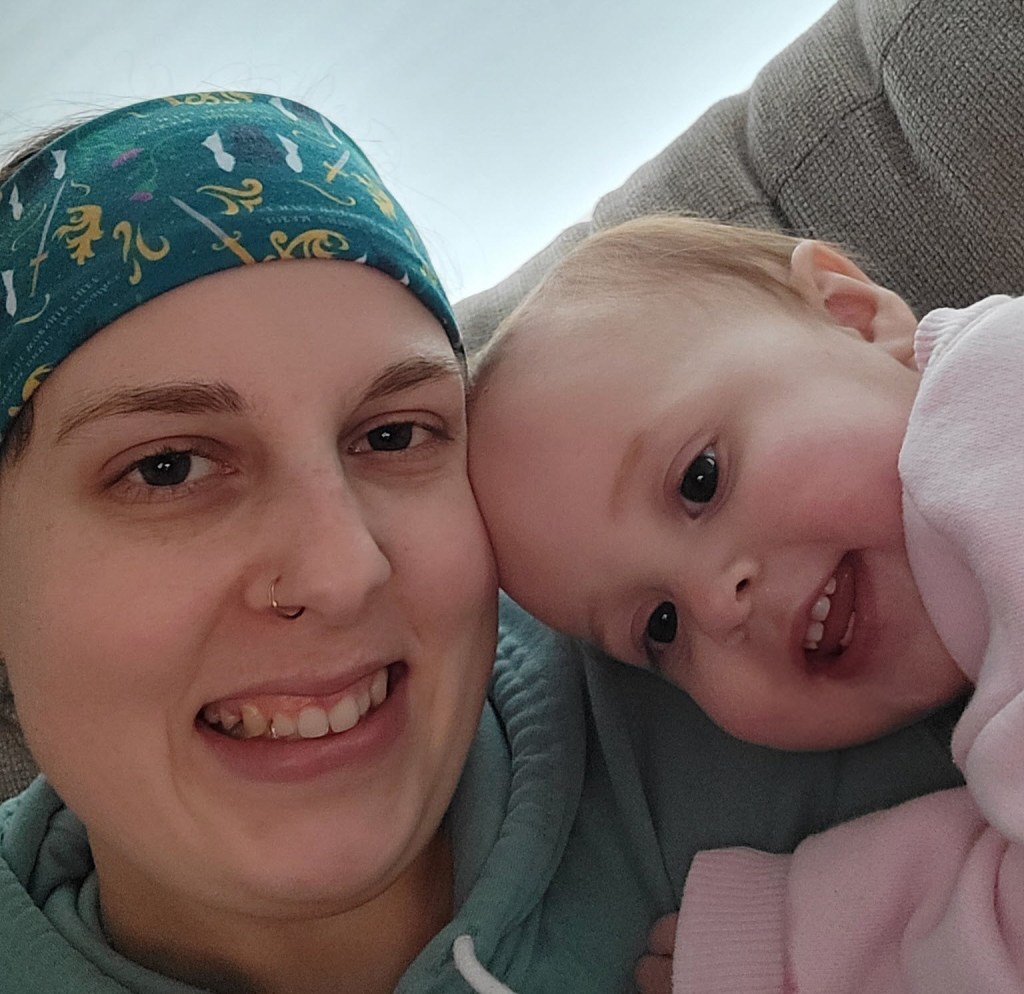
February felt rushed, heavy, and honestly a little depressing — but February often carries that weight. I’m weary of winter. Even though we had a few warmer days, it almost made it harder; the tease of sunshine only stirred my longing for spring. I’m craving flowers, bright colors, warmth on my skin, and the simple joy of walking outside without piling on three extra layers. This month felt “blah” in many ways, but there was one beautiful bright spot: celebrating my granddaughter’s first birthday. Sophia turning one filled my heart in a way the gray skies couldn’t dim. I am so proud of her and so incredibly blessed to be her grandma — and that joy lifted my spirits more than anything else this month.


What Went Well

Celebrate the wins, big or small. Nothing is too minor to count.

  • I bought a treadmill.
  • I got to see my Sophia twice!
  • I’ve taken steps to lessen my phone/social media time.

What Was Hard

This is a judgment-free space. Name the struggles without shame.

  • Emotional eating was hard.
  • That lead to a 3 lb weight gain and that was hard.
  • Seeing myself in pictures from Christmas was hard.

Habits I’m Working On

The habits I’m intentionally building or strengthening.

  • Getting in the Word each morning, even if it’s only a few quiet minutes to center my heart before the day begins.
  •  Being more mindful of how much I eat — paying attention instead of eating out of boredom or habit.
  •  Making small, sustainable exchanges — like using just a dash of French vanilla creamer combined with oat milk in my coffee instead of all creamer. It’s helping me slowly adjust to less sweetness while still keeping that creamy comfort I enjoy.

Habits I Need to Let Go Of

The things that aren’t serving my health or peace.

  • Ice cream every night. I crave it, but I’m choosing to let that habit go and replace it with a cappuccino instead — far less sugar and a better trade-off.
  • Letting go of lazy habits that keep me stuck instead of moving forward.
  • Letting go of doom scrolling and the mental heaviness that comes with it.

Mental & Emotional Health Check

How this journey affected my mindset, emotions, and self-esteem.

  • What thoughts showed up often?
    A lot of “I’m tired of this season” thoughts. I felt restless, bored with winter, and ready for change. I caught myself thinking about how slow everything feels right now and how badly I want light, color, warmth, and forward movement. There was also a quiet undercurrent of wanting more — more energy, more joy, more purpose — even while feeling a little stuck.
  • What helped my mental health this month?
    Seeing my granddaughter Sophia — especially celebrating her first birthday — truly lifted my spirits. Making small health changes, like buying the treadmill and adjusting my coffee habit, gave me a sense of control and momentum. Creating a plan for my future also helped; vision always brings hope. And even a few warmer days reminded me that winter doesn’t last forever.
  • What didn’t?
    Too much time inside. Doom scrolling. Giving in to nightly sugar cravings. Letting boredom turn into mindless habits instead of intentional choices. Those things didn’t add peace — they just added heaviness.


Faith & Reflection

Where God met me this month.

  • God met me faithfully in His Word this month. As I’ve been more intentional about spending time with Him each morning, I’ve started to notice a gentle pruning — especially in my thought life. I’m thinking more about God and His truth, and less caught up in those circular mental conversations that never lead anywhere good. There’s a quiet shifting happening in me. I’m more aware, more anchored, and more determined to live my life from the throne — grounded in His authority, not my emotions.

Accountability Corner

(Sharing with grace, not shame.)

  • Change this month: Up 3 lbs


Lessons Learned

This month taught me that my body responds to small, consistent choices more than dramatic overhauls. I don’t need extremes — I need steadiness. A treadmill in the corner. A little less creamer. A little less sugar. A little more awareness. My body seems to thrive when I treat it gently but intentionally.

It also showed me how easily habits form around comfort. Ice cream at night, scrolling when I’m bored, staying wrapped in the dullness of winter instead of moving through it. My habits reveal what I reach for when I feel restless or low.

And my heart? It reminded me that I crave hope and forward movement. I need vision. I need light. I need the Word. When I give my heart truth and purpose, it steadies. When I don’t, it drifts. This month taught me that tending my heart daily isn’t optional — it’s everything.


Looking Ahead to Next Month

One or two realistic goals for the coming month.

  • Walk on the treadmill at least 4 days a week for 20–30 minutes. Nothing extreme — just steady movement to build consistency and keep momentum going, even if winter lingers a little longer.
  • Keep my morning Word habit simple and non-negotiable. Even 5–10 focused minutes each day, choosing faithfulness over perfection and anchoring my heart before the noise begins.

Closing Thoughts

February felt gray in more ways than one, but it wasn’t empty. Even in the rush, the boredom, and the heaviness, there were quiet shifts happening beneath the surface. Small habits were planted. Thoughts were pruned. Vision was formed. Joy showed up in the face of a one-year-old little girl who reminded me that new life is always growing somewhere.

If this month felt slow or “blah” for you too, maybe that doesn’t mean you’re failing — maybe it just means you’re in between seasons. Winter doesn’t last forever. Light returns. Flowers bloom. Energy comes back. In the meantime, we keep showing up in small, faithful ways.

Here’s to steady steps, gentler thoughts, and living from the throne — anchored, hopeful, and expectant for what the next month will bring.


Invitation

If you’re on a similar journey, I’d love to hear from you.
What worked for you this month? What are you struggling with?


Photo by Glen Carrie on Unsplash
Posted in Moments and Musings

Worship Disruption and Reverence

Dear Church,

This is not a suggestion. This is a rebuke given in love.

We must confront a pattern that has quietly taken root in our congregations: a casual, irreverent, and dismissive attitude toward the time of worship that precedes the preaching of the Word. What we have normalized, Scripture calls disorder. What we excuse as habit, heaven sees as dishonor.

Week after week, worship begins—and many of God’s people are not present. The call to stand is given, yet conversations continue. Laughter carries on in the aisles and lobby. Coffee is poured. Greetings linger. People drift into the sanctuary as though the presence of God has not already been invited to fill the room. The first song ends, the second is halfway through, and only then do some finally decide it is time to participate.

Let us be clear: this is not a minor issue of preference or personality. It is a matter of reverence.

“Guard your steps when you go to the house of God.”
—Ecclesiastes 5:1

Worship is not the prelude. It is not the warm-up. It is not background noise while we finish our conversations. The worship team is not a band filling time until the “real” part of the service begins.

Worship is the people of God responding to the holiness of God.

“God is spirit, and those who worship Him must worship in spirit and in truth.”
—John 4:24

When we habitually arrive late, disengaged, distracted, or indifferent, we are not merely disrespecting a team—we are demonstrating what we truly believe about God’s worth.

Arriving late to worship affects more than just you. When you slip in after worship has begun, you disrupt those who honored the call to be on time, pulling their focus from God to accommodate your seat. Coffee, conversation, and convenience should never take priority over inviting His presence. This is not neutral—it is disruptive and dishonors the sacredness of the moment.

The worship team does not stand on that platform for applause or performance. They carry a spiritual burden. They labor for hours in rehearsal and in prayer, often unseen and uncompensated, so that the body of Christ may be led into the presence of the Lord. They come prepared to serve, yet many in the congregation come prepared only for convenience.

This should grieve us.

Worship is not passive. It is participation. It is submission. It is sacrifice. It is an offering of ourselves before the Word is ever preached.

“I appeal to you… to present your bodies as a living sacrifice, holy and acceptable to God, which is your spiritual worship.”
—Romans 12:1

Ask yourself honestly: if your employer required you to be ready at a certain hour, would you make a habit of strolling in late and always expect grace? If a judge summoned you to court, would you stop for coffee first? If a wedding ceremony began, would you walk in halfway through the vows and see nothing wrong with it?

Yet we do this before the King of Kings.

We understand punctuality when it affects our income, our reputation, or our relationships. But when it comes to the Lord, we often offer Him what is left over—our leftover time, our divided attention, our delayed obedience. And delayed obedience is still disobedience at some point.

Church, this should not be so.

We were created to worship.
We were formed to bow.
We were designed to lift our voices in reverence and awe.

“Come, let us bow down in worship, let us kneel before the Lord our Maker.”
—Psalm 95:6

Worship prepares the soil of the heart. It softens us. It humbles us. It aligns us with the holiness of God so that when His Word is preached, it does not fall on hardened ground. To neglect worship is to come unprepared to hear Him speak.

If we have treated worship casually, we must repent.
If we have prioritized comfort and coffee over reverence, we must repent.
If we have shown up late without conviction, disengaged without remorse, distracted without shame—we must repent.

“If My people, who are called by My name, will humble themselves and pray and seek My face and turn from their wicked ways, then I will hear from heaven.”
—2 Chronicles 7:14

Repentance is not regret. It is change.

It means planning to arrive early.
It means entering the sanctuary with intention.
It means silencing distractions, ending conversations, and standing ready to worship when the first note is played.

“Let all things be done decently and in order.”
—1 Corinthians 14:40

Let us once again treat worship as sacred.
Let us honor those who lead us.
Let us revere the God we claim to serve.

The Lord is worthy—not of our leftovers, but of our first and our best.

“Ascribe to the Lord the glory due His name; worship the Lord in the splendor of holiness.”
—Psalm 29:2

Church, it is time to act like we believe that is true.

Photo by Jon Tyson on Unsplash
Posted in Moments and Musings

Just Sophia

Every time a child is born, families gather around and almost immediately begin comparing. Who does the baby look like? The mother or the father? Someone points out the eyes, another notices the nose, and before long the room is filled with opinions and laughter. It’s almost instinctive, this need to trace a child back to someone else, as if resemblance helps us understand where they belong. In a way, it feels like we’re all trying to claim a small piece of this brand-new person before we even know who they are.

I did the same thing.

When Sophia was born, I found myself searching for familiarity. I pulled up baby pictures of Emilie and studied them side by side, holding them next to each other and scanning for similarities. In those early days, it’s hard to tell—most babies look pretty much the same in the infancy stage. Soft faces, rounded cheeks, features that haven’t yet settled into anything distinct. At that stage, you’re mostly guessing.

But as Sophia grew out of that newborn look and into her baby face, things became clearer. Her features began to take shape, and it was obvious that she favored her father. The resemblance wasn’t subtle. Still, there were moments—certain expressions, tiny mannerisms, a look in her eyes—that reminded me of Emilie. Those moments felt important, like little confirmations that I was seeing something meaningful.

It’s such a common thing for families to do, and I commented on it often. I’d joke with Emilie, saying things like, “Sorry, she looks exactly like her father.” We laughed about it more than once. It felt harmless and lighthearted, just part of the way people talk about babies. No deeper meaning intended. Just conversation.

Then one day, during a similar exchange, Emilie said something that stopped me completely.

“She looks like Sophia to me,” she said. “Just Sophia. And that is all.”

That is all.

Her words lingered in the air long after the conversation moved on. At first, I wondered if I had unintentionally hurt her feelings with all the comparisons that seemed to leave her out. I replayed past comments in my head, questioning whether they landed differently than I meant them to.

But that wasn’t it at all.

She wasn’t offended. She wasn’t correcting me. She was simply stating a truth—plain, uncomplicated, and confident.

And the more I thought about it, the more I realized it was the same truth I’ve spoken over my own girls for years. Emilie looks like Emilie. Shelby looks like Shelby. Neither one looks exactly like me or their dad, and honestly, they don’t even look much like each other. Their connection isn’t found in identical features or shared expressions. They are connected by love, by history, by the life they’ve grown together—not by carbon-copy appearances.

Since overthinking is my superpower, I sat with Emilie’s words longer than most people probably would. I let them settle in my heart and mind, turning them over again and again. That reflection led me to Psalm 139:13–16—a passage that speaks so clearly about God’s intentional design.

It reminds us that God forms us carefully and purposefully, knitting us together with precision and love. That we are fearfully and wonderfully made, not accidentally assembled or loosely imagined. There is no other Vikki like me on this planet. Not one. That’s how intentional God is. Uniquely chosen. Uniquely made.

So when Emilie said, “She just looks like Sophia to me,” something clicked.

Of course she does.

Because there has never been—and never will be—another Sophia exactly like her. She doesn’t need to resemble anyone else to be worthy, to belong, or to be known. Whatever God has planned for her will be just as unique as the way she was created, shaped by a purpose meant only for her.

And maybe that’s the quiet lesson hidden beneath all those well-meaning family comparisons. Before we rush to decide who someone looks like, before we search for reflections of ourselves in them, we should pause. Long enough to see them fully. Long enough to recognize that they don’t need to resemble anyone else to be complete.

Sometimes, the most beautiful thing we can say about a person is simply this:
They look like themselves. And that is all.

Photo by me. @vikkilynnsorensen. All rights reserved.
Posted in Moments and Musings

Lent Through the Lens of Grace

Lent has always been familiar to me.

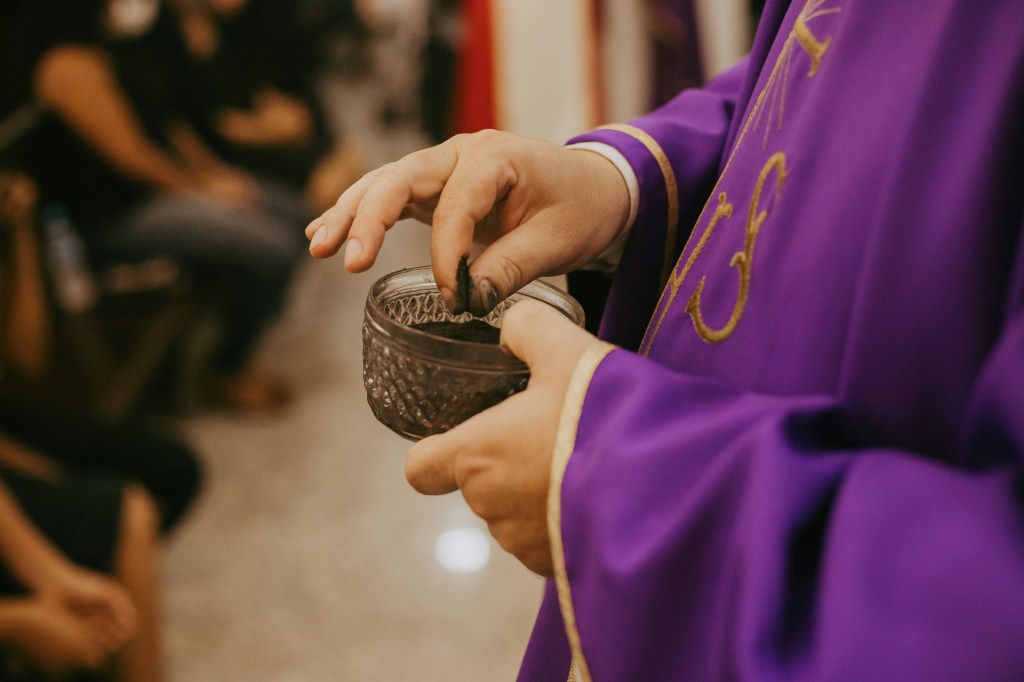
As a Catholic, I grew up knowing the rhythms of the Lenten season—the ashes on my forehead, the quiet reverence in church, the call to fasting, repentance, and reflection. Lent was serious. Sacred. It was a season that asked you to slow down and look inward.

But over the years, as my faith has deepened and I’ve come to know Jesus not just as Savior, but as my Savior, Lent has taken on a richer, more personal meaning.

Today, I stand in a place that some people struggle to define. I am Catholic. And I am also a born-again Christian. I treasure the history, beauty, and reverence of the Church, and I cling just as fiercely to the truth that I am saved by grace alone through faith in Jesus Christ.

“For by grace you have been saved through faith. And this is not your own doing; it is the gift of God.” (Ephesians 2:8)

So what does Lent mean to me now?

It means remembering—without drowning in guilt or shame.

For a long time, Lent felt heavy. I approached it with quiet pressure: What am I giving up? What am I doing wrong? Am I doing enough? Reflection sometimes slipped into self-condemnation. There was an unspoken belief that if I felt bad enough, suffered enough, or sacrificed enough, I would somehow be closer to God.

But Jesus already suffered enough.

“Surely he has borne our griefs and carried our sorrows.” (Isaiah 53:4)

Lent is not about punishing ourselves. It is about positioning ourselves to remember.

Remembering the road to the cross.
Remembering the weight Jesus carried—willingly.
Remembering that the sacrifice was complete, final, and fully sufficient.

“He himself bore our sins in his body on the tree, that we might die to sin and live to righteousness.” (1 Peter 2:24)

This season, I don’t want to sit in shame over who I am not. I want to sit in awe of who He is.

Lent invites us to look back—but not to live there. We look back to see the cross clearly so we can move forward in freedom. We look back to remember the cost of grace, not to question whether we deserve it.

Because we don’t—and that’s exactly why it’s grace.

“There is therefore now no condemnation for those who are in Christ Jesus.” (Romans 8:1)

As a born-again believer, I understand repentance differently now. Repentance is not self-loathing or spiritual self-punishment. It is turning—turning my heart, my eyes, and my life back to Jesus.

“Repent therefore, and turn back, that your sins may be blotted out.” (Acts 3:19)

And as a Catholic, I still deeply value the quiet discipline of Lent. The fasting. The stillness. The intentional pauses. Lent reminds me that faith is not always loud or dramatic. Sometimes it is humble obedience. Sometimes it is sitting in silence, letting the magnitude of the cross speak for itself.

“Be still, and know that I am God.” (Psalm 46:10)

This year, I want my Lenten sacrifices to look different.

Less about obligation.
More about intention.

Less about what I am giving up to prove something.
More about what I am laying down out of love.

“Present your bodies as a living sacrifice, holy and acceptable to God, which is your spiritual worship.” (Romans 12:1)

That may look like more time in Scripture.
More gratitude instead of grumbling.
More honest prayer instead of polished words.
More remembrance of all that Jesus has already done.

Because when I look back at the cross, I don’t see condemnation—I see mercy.

“But God shows his love for us in that while we were still sinners, Christ died for us.” (Romans 5:8)

I don’t see a demand for perfection. I see a Savior with outstretched arms declaring, “It is finished.”

“When Jesus had received the sour wine, he said, ‘It is finished,’ and he bowed his head and gave up his spirit.” (John 19:30)

Lent is not a season to earn forgiveness.

It is a season to remember that forgiveness has already been given.

“In him we have redemption through his blood, the forgiveness of our trespasses, according to the riches of his grace.” (Ephesians 1:7)

So this Lent, I am choosing reflection over shame. Gratitude over guilt. Grace over striving. I will look back—but only long enough to see the love that changed everything.

And then, with eyes fixed on Jesus, I will move forward in freedom.

“Let us run with endurance the race that is set before us, looking to Jesus, the founder and perfecter of our faith.” (Hebrews 12:1–2)

That is what Lent means to me now.

Photo by Thays Orrico on Unsplash

Posted in Moments and Musings

Don’t Waste Your Art on Anger

There’s a quote from the 1989 film Dead Poets Society that has stayed with me for years. Robin Williams’s character says:

“Poetry, beauty, romance, love—these are what we stay alive for.”

That line has always rung true to me. Art, in all its forms, was never meant to be a weapon or a megaphone for outrage. Art is about meaning. It’s about connection. It’s about beauty. It’s about reminding us—especially in difficult seasons—why life is still worth living.

And yet, the longer I spend in online creative spaces, the more I see art being used for something else entirely.

Around 2020, as I became more active on social media, I intentionally sought out communities built around the things I love. I adore books, so bookstagram felt like a natural fit. I wanted to talk about stories, discover new authors, share what I was reading, and write about the books that moved me.

That’s not what I found.

Instead, I found politics. Anger. Rage. Cancel culture. Public shaming. Nastiness—often aimed at strangers. And it wasn’t limited to one side of the political spectrum. It was everywhere. The joy of reading, the beauty of storytelling, and the love of language were drowned out by outrage and moral grandstanding.

I lasted maybe two years before I was tired. Not just annoyed—tired. Spiritually tired. Creatively tired. Emotionally tired.

A couple of years ago, I tried again. This time, I stepped into the online craft community. Once more, I hoped to find inspiration, encouragement, and artists whose work would challenge me to grow. I even saw it as a way to market what I hope will someday be a thriving business.

But here I am again, considering stepping away.

Why?

Because once again, I’m watching people use their art to express anger and rage.

Before this is misunderstood, let me be clear: this is not a commentary on anyone’s personal politics, nor is it a declaration of my own. I am constantly soul-searching, praying, and thinking deeply about what I believe. What I do know is this—man-made politics will always be imperfect. Always. Only God reigns supreme, and only His ways are perfect.

I also believe—strongly—that someone can love God wholeheartedly, serve Him faithfully, and maintain a beautiful relationship with Him while voting differently than I do. And that’s okay. Differences without division. My pastor says that often, and it’s something I hold onto tightly.

People love to say, “Art is political.”

I disagree.

Art is only political if you make it political.

At its core, art is meant to be beautiful and precious. It’s meant to tell stories, stir the soul, and create something that didn’t exist before. It’s meant to point us toward hope, not deepen our despair. As Dead Poets Society so perfectly puts it, poetry, beauty, romance, and love are what we stay alive for.

What troubles me most, though, is the contradiction I keep seeing.

The same artists who repeatedly say, “I craft for my mental health,” often create nothing but anger and rage. If every piece is fueled by outrage, if every project exists to provoke or condemn, how is that healing? How is that restorative? Anger doesn’t disappear once the project is finished—it lingers. What we pour into our art shapes us in return.

To be clear, this isn’t an announcement that I’m shutting down my Instagram account or walking away from social media entirely. It is a conscious decision to be far more intentional about what I consume, what I engage with, and what I allow to influence my heart. Protecting my peace isn’t avoidance—it’s stewardship. Not every conversation deserves my energy, and not every creative space is healthy for my spirit.

Above all else, my objective remains unchanged: to love the way Jesus loves—everyone, and at all times. That means choosing grace over outrage, humility over hostility, and compassion over the need to be right. I don’t want my creativity—or my character—to be shaped by anger. I want it shaped by love.

So if that means fewer hours scrolling and more hours actually creating, I’m okay with that. If that means stepping back from spaces that thrive on judgment and rage, I’m okay with that too. I’ll gladly trade noise for beauty, outrage for peace, and endless commentary for meaningful creation.

I’ll probably spend more time on Pinterest. I’ll definitely spend more time making things—things that are lovely, thoughtful, and life-giving. Things that remind me why I fell in love with art in the first place.

Because poetry, beauty, romance, and love really are what we stay alive for. And I refuse to waste my art on anger.

Scripture reminds us, “Finally, brothers and sisters, whatever is true, whatever is noble, whatever is right, whatever is pure, whatever is lovely, whatever is admirable—if anything is excellent or praiseworthy—think about such things” (Philippians 4:8). That is the posture I want my art—and my life—to reflect. Not anger. Not rage. But beauty, truth, and love.

A Prayer

Lord,
Thank You for the gift of creativity and for the ability to make things that reflect beauty, truth, and love. Guard my heart from anger that hardens and outrage that distracts. Help me to be a good steward of the gifts You’ve placed in my hands and the voice You’ve given me.

Teach me to create from a place of peace rather than reaction, from love rather than fear. When the noise grows loud and division feels tempting, draw me back to what is good, what is lovely, and what brings life. Shape my art so that it points to You and reflects Your grace.

Most of all, help me to love as You love—freely, generously, and without condition. May my words, my work, and my choices honor You in both what I create and what I choose to lay down.

Amen.