Posted in Bookish and Bingeable

Confessions of a Devout Viewer of British Murder Mysteries

I need to confess something.

I watch a shocking amount of British murder mysteries.

Not casually. Not “oh I’ve seen a few episodes.” I mean season-after-season, Christmas-special-included, spin-off-considered-canon levels of commitment.

If there were a degree in “Homicide in Quaint English Villages and Occasionally Windswept Coastal Regions,” I would graduate with honors. Possibly valedictorian. With a dissertation on “The Suspicious Nature of Florists.”

It started innocently enough. One cozy detective show. A charming inspector. A slightly ominous soundtrack.

Now I no longer trust anyone who:

  • Owns a manor house
  • Inherited anything
  • Says “How very odd…”

Midsomer Murders: Do Not Move There

Let us begin with Midsomer Murders.

The English countryside has never looked so inviting… or so statistically dangerous.

Flower festivals? Murder.
Writers’ retreats? Murder.
Bell-ringing competitions? Definitely murder.

Inspector Barnaby strolls through villages so charming they look like teapot paintings, calmly solving what must be the highest per-capita homicide rate in Europe.

And yet—tea is served. People apologize for being suspected. The murderer often confesses with impressive emotional restraint.

It’s chaos. But polite chaos.


Death in Paradise: Murder With a Tan

Then there’s Death in Paradise.

A brilliant detective solving crimes on a Caribbean island while stubbornly wearing a full suit in tropical humidity.

Palm trees sway. The ocean sparkles. Steel drums play.

And someone has just been poisoned at a beach bar.

The commitment to formal attire alone deserves an award.

The formula is flawless:

  • Closed-circle mystery
  • Eccentric suspect
  • Shocking-but-not-really reveal

All delivered at sunset.

It’s murder… but cheerful.


Return to Paradise: Sunshine and Suspicion

Return to Paradise continues the tradition of breathtaking scenery paired with deeply inconvenient deaths.

Blue skies. Coastal views. And yet everyone has motive.

I can no longer look at a scenic overlook without thinking, “Yes, this is where someone would dramatically discover a body.”


Father Brown: Gentle, Observant, Terrifyingly Insightful

Father Brown is possibly the coziest homicide-solving priest in television history.

Soft-spoken. Thoughtful. Cycling around the countryside.

And then quietly dismantling your alibi with unnerving precision.

There’s something delightful about a parish fête turning into a crime scene and Father Brown gently saying, “I’m afraid that isn’t entirely true.”

It makes murder feel… wholesome?

Which is concerning.


Inspector George Gently: Moody and Moral

Inspector George Gently brings us grit and moral depth.

Set in the 1960s, it’s less teacups and more tension. Rain-soaked streets. Ethical dilemmas. Brooding stares.

It’s the kind of show that makes you reflect on justice and humanity… while admiring excellent wool coats.


Vera: Wind, Wisdom, and Withering Looks

Ah, Vera.

If windswept Northumberland were a person, it would be Vera Stanhope in a sensible hat.

She trudges across bleak coastlines and rolling moors with unmatched determination and zero tolerance for nonsense.

No glamour. No theatrics. Just sharp instincts and deeply perceptive interrogations.

Vera doesn’t need dramatic monologues. She just needs one raised eyebrow and a quiet “Pet…” before unraveling your entire story.

I aspire to that level of unbothered competence.


Shetland: Where It’s Always Windy and Emotionally Complex

Then there’s Shetland.

Stunning. Stark. Windswept to the point that I feel cold watching it.

The scenery is breathtaking in a “you might emotionally unravel here” kind of way.

The mysteries are layered. The characters are complicated. The atmosphere is intense.

Also, everyone looks like they’ve just come in from standing dramatically on a cliff contemplating secrets.

I respect that aesthetic deeply.


Agatha Christie Mysteries: The Blueprint for It All

And of course, we must bow respectfully to the queen: Agatha Christie.

Whether it’s Poirot with his impeccable mustache and immaculate suits, or Miss Marple quietly observing everyone while knitting, these stories are the foundation of my obsession.

Drawing rooms.
Teacups.
Inheritance disputes.
A gathering of suspects.

And then:

“I will now explain exactly what happened.”

There is no greater comfort than a Belgian detective straightening a cuff and restoring order to the universe.

Christie taught us that human nature is complex, motives are layered, and someone is always listening more closely than you think.


The Miniseries: My Weekend Disappears

And then there are the British miniseries.

Four episodes.
One stately home.
Everyone is lying.

These are dangerous.

You say, “I’ll just watch one.”

Suddenly it’s 1:42 a.m., and you’ve uncovered generational betrayal, financial fraud, and a tragic poisoning.

I emerge exhausted… and immediately search for another.


I Am Now Suspicious of Everyone

This genre has changed me.

I cannot attend a garden party without quietly assessing motive.

  • The overly helpful neighbor? Suspicious.
  • The charming newcomer? Definitely hiding something.
  • The person who says, “What a lovely evening”? Prime suspect.

British murder mysteries have taught me:

  1. The least likely person absolutely did it.
  2. The kindest person might be harboring resentment.
  3. If someone says, “I can’t imagine who would want him dead,” they absolutely can.

I now narrate ordinary life in a dramatic British accent.

“She had no idea… this cup of tea would be her undoing.”

(It was chamomile. Everyone survived.)


Why Is This So Comforting?

On paper, this obsession seems questionable.

But here’s the truth: it’s about resolution.

No matter how tangled the story becomes:

  • Clues matter.
  • Truth surfaces.
  • Justice prevails.
  • Order is restored.

And someone always explains everything before the credits roll.

Life doesn’t always give us tidy endings.

But in Midsomer? It does.
On a tropical island? It does.
On the moors with Vera? It does.
On Shetland’s cliffs? It does.
In Poirot’s drawing room? Absolutely.

Even the chaos feels structured.

Tea is poured.
Coats are tailored.
The detective always knows.

And maybe that’s why I keep watching.

So if you visit my house and hear dramatic orchestral music swelling from the living room, don’t worry.

I am not plotting anything.

I’m simply admiring countryside scenery, narrowing suspects, and feeling deeply reassured that somewhere, in some fictional village, someone is about to say:

“I believe I know who did it.”

And honestly?

So do I.
Posted in Bookish and Bingeable

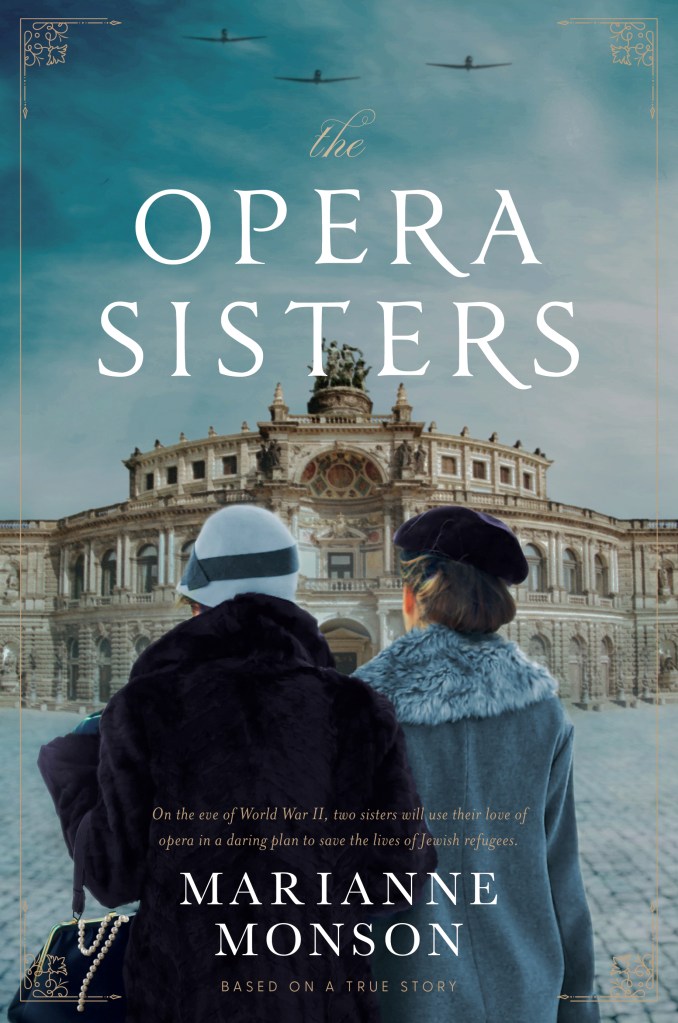
The Opera Sisters

By Marianne Monson

NOTE – Special thanks to NetGalley and Shadow Mountain Publishing for an eARC in exchange for an honest review. 

British sisters Ida and Louise Cook use their love of opera as means to travel back and from between Germany and England while saving the lives of Jewish people.

Lately, it seems like every time I read historical fiction, I learn something new. This book was so different. I had no idea these two women existed and I was completely unaware of their bravery. Also, while I knew London got hit hard during this war, I found myself really saddened by just how hard. I wasn’t aware how many civilians lost their lives. I also didn’t know that Hitler actually did declare war on the United States and looked forward to taking her down. So this book was quite an education. 

What worked really well for me: 

  1. This book was very well researched. From opera to historical facts, research poured into every page. Footnotes were included at the bottom to give resources from where information came from. 
  2. There was a lot of emotion in this story. There wasn’t one character that didn’t make me feel something. 
  3. The story itself was brave and bravely told. It kept a good pace but the story itself kept you going, wanting to know what was next and who was saved..and who didn’t make it.
  4. The character growth was really present. Louisa and Ida are made completely different by the war and their actions during the war. Their whole family changes.  

What didn’t work for me: 

  1. The ending seemed a little abrupt. Although, that could have been me because I really wanted to know so much more about these ladies. 
  2. If you don’t know opera, there were some spots that got quite technical. I grew up on opera so I was able to fully appreciate those moments. 

Out of all the historical fiction you may read, make this book one that you do. One quote especially resonated with me after experiencing these past couple of years: 

“My dears, the past few years have enlightened us all,” Rosa told them. “It’s easy to think there are sharp lines dividing the good people and bad people, but most humans have dark passions inside waiting to be stirred up. It’s easier than we think to become convinced that decency is for the weak, that democracy is naive, that kindness and respect for others are ridiculous. The whole world has been reminded these past few years that the things we care about have to be nurtured and defended because even seemingly good people have the potential to do hideous things.”

My rating: :star: :star: :star: :star: :star:

Posted in Bookish and Bingeable

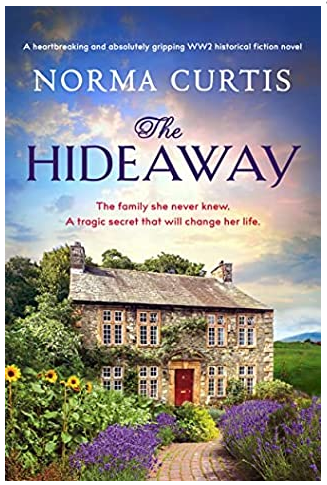
The Hideaway

By: Norma Curtis

Heidi (Hedi) Fischer is a WWII camp survivor, mother of one daughter, grandmother of one granddaughter and she just said goodbye to the love of her life, her husband Harry. She hasn’t seen her daughter in many years due to a fallout they had and therefore, hasn’t seen her granddaughter since she was a toddler. At 90 years old, her plan now is just to die. 

Thea is her granddaughter who has never really settled into any one job, one place, one relationship and is on the move again when she comes apon a small home by a small lake needing some love and attention. She decides to rent it out for the summer. Then she gets a call from her mother saying her grandfather has just died and would she attend the funeral. Maggie, her mother, lives far away and due to her broken relationship with her parents doesn’t want to attend. Thea agrees. 

Thea meets up with Hedi at the funeral and they share lunch afterwards. The plan is for Thea to return to her life while Hedi goes home to die. Hedi’s spiteful neighbor has been watching Hedi get rid of everything in her home. Her husband’s books, furniture, clothing, everything is gone and, after a confrontation with Hedi, she calls social services on her. Social services calls Thea to come and look after her grandmother after which Thea decides to bring Hedi to the summer home she’s renting. 

Hedi decides to confide in her granddaughter all that she never told her mother about her life at the camps, how she met her husband and the promises they made to each other never to talk about what they both went through. A bond forms between the two women and by the end of the story, Thea realizes what a treasure Hedi is and nothing like her mother described. 

I really liked this story. Hedi is a fiery woman full of flaws, regrets and imperfections. She’s also full of a lot of love. As her story unravels, I really loved how we get to see the contradiction between her and Harry; Hedi is strong and fierce and very much an in-your-face type of person while Harry is quiet, gentle and very forgiving. Same with Thea and Maggie. While Maggie very much a supporting character, she’s very quick-tempered, bold and outspoken, like her mom. Thea is gentle, kind and forbearing. 

Here’s what really worked for me: 

  1. Character development – There is a nice character development in this story. I would imagine it would be hard to do this with a 90 year old character since most people are set in their ways however, Norma Curtis handles this with ease in the character of Hedi. 
  2. The setting was lovely – Set in England just outside of London, the house feels like every summer home I’ve ever wanted to visit, up to and including the outhouse. (Although, if I’m being honest, I’m an indoor plumbing girl all the way.) 

3. The relationships – The relationship between Thea and Hedi is so moving. It made me wish to talk to my grandmother again.

Here’s what didn’t work for me –

  1. Maggie – I’m not really sure what she was so upset about. Either I missed it or it wasn’t written well enough. But I really didn’t like her at all. She was too cold. Too much without heart. Her anger, or whatever it was, felt forced.
  2. The ending – It was beautiful but again, the character of Maggie was really hard to believe. First she hated her mother so much that she thought her dead and, in one short conversation, she’s all over it!
  3. The relationship between Maggie and Thea – First, I was curious as to why first names were used and not titles. For example, Thea called Maggie “Maggie” and not “Mom”. But I really couldn’t understand why their relationship was strained. 

Overall, this is a lovely story. I loved Hedi over and over and wished for her to be my grandmother so many times. Then I wished for my own grandmother and wished I could introduce her to my girls.

NOTE – Thanks to Netgalley and Bookouture for an eARC in exchange for an honest review. 

My rating: :star: :star: :star: :star: 

Posted in Bookish and Bingeable

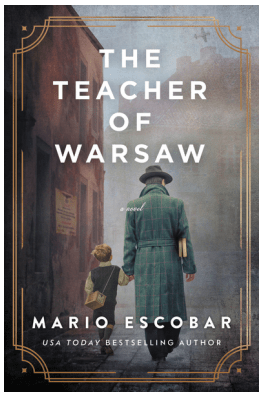
The Teacher of Warsaw

By: Mario Escobar

NOTE – I received a complimentary copy of this book. Opinions expressed in this review are completely my own. Thanks to NetGalley and Harper Muse for the eARC. 

It’s hard to know where to start with this review without having fully digested the ending. This story is warm and cold, hard and soft, anger-inducing and tear-extracting. It had all the feels and in all the right moments. 

Janusz Korczak is a sixty year old teacher living in Warsaw in 1939 when Nazis invade and his world collapses around him and the Jewish orphans who live at his school. The story progresses as one would think; the Nazis invade and little by little, freedoms are taken away until they are all rounded up and impounded in the Warsaw ghetto. Once there, their lives take a turn for the worse until the painful end. 

Here’s what worked well for me – 

  1. This book felt written very much off the heart of the sleeve of someone who desperately wanted to convey this story. 
  2. The idea of this hero in the autumn of his life yet still so strong, so fierce, so gentle and so kind fighting for children when he was given every opportunity to escape is awe inspiring, to say the least. 
  3. The relationships Janusz had with those around him, from the children to adult, who gave their all and more at a time when tomorrow wasn’t guaranteed played out well in this story. 

Given this book was based on a real-life hero, it would be remiss of me to add anything negative to this. This story was simply beautiful and so very tragic. It stays with you long past the last page. Read it with a box of kleenex. 

My rating: :star: :star: :star: :star: 

Posted in Bookish and Bingeable

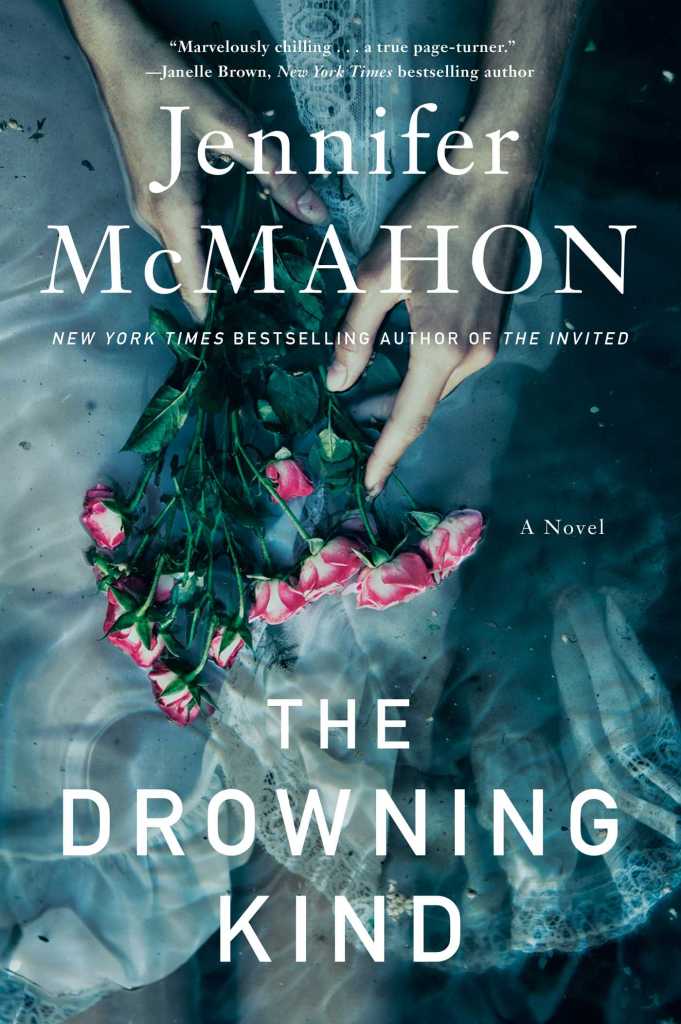
The Drowning Kind

By: Jennifer McMahon

I live by a small lake. I’ve never feared it until I read this book. The idea now is to stay away from the water. 

Jennifer McMahon does it again with The Drowning Kind. Such a wonderfully magical, haunting story full of intrigue and suspense. I read this in under 24 hours and I’m not even upset about any sleep I lost. 

Jax is a young woman mourning the loss of her estranged sister, who struggled with mental health issues. This loss leads her to her grandmother’s home, a place Jax and Lexie grew up in. The house is situated next to a pool believed to have magical powers. Family history is explored as Jax discovered the pool’s relationship with her family going back to her great grandparents who made a wish to the pool in exchange for a child. Jax finds out what Lexie did just before her death – the pool gives and takes in equal measure. 

What I loved about this book: 

  1. The story felt original and well plotted. The pace was excellent. Dual timelines told in perfect timing (no pun intended) left me with a complete picture as the past and present converged by the end of the book – a technique I particularly enjoy. 
  2. Inanimate objects given a life of their own. Another favorite of mine. The pool as well as the house and the land, even the hills behind the house (Lord’s Hill and The Devil’s Hill) were allowed names and personalities all their own. It was flawlessly done. 
  3. THE ENDING!!!! Chilling, shocking and so sad. And yet, it worked with the story. I think I would have been disappointed any other way. 

What I didn’t like about this book: 

  1. It’s made me think twice about those walks around the lake next to where I live. 
  2. I’ll miss going swimming. 

If you’re looking for a book to provide a good amount of creep-factor, read this! Then go read everything else by Jennifer McMahon. 

My rating: :star: :star: :star: :star: :star: