Posted in Moments and Musings

Lent Through the Lens of Grace

Lent has always been familiar to me.

As a Catholic, I grew up knowing the rhythms of the Lenten season—the ashes on my forehead, the quiet reverence in church, the call to fasting, repentance, and reflection. Lent was serious. Sacred. It was a season that asked you to slow down and look inward.

But over the years, as my faith has deepened and I’ve come to know Jesus not just as Savior, but as my Savior, Lent has taken on a richer, more personal meaning.

Today, I stand in a place that some people struggle to define. I am Catholic. And I am also a born-again Christian. I treasure the history, beauty, and reverence of the Church, and I cling just as fiercely to the truth that I am saved by grace alone through faith in Jesus Christ.

“For by grace you have been saved through faith. And this is not your own doing; it is the gift of God.” (Ephesians 2:8)

So what does Lent mean to me now?

It means remembering—without drowning in guilt or shame.

For a long time, Lent felt heavy. I approached it with quiet pressure: What am I giving up? What am I doing wrong? Am I doing enough? Reflection sometimes slipped into self-condemnation. There was an unspoken belief that if I felt bad enough, suffered enough, or sacrificed enough, I would somehow be closer to God.

But Jesus already suffered enough.

“Surely he has borne our griefs and carried our sorrows.” (Isaiah 53:4)

Lent is not about punishing ourselves. It is about positioning ourselves to remember.

Remembering the road to the cross.
Remembering the weight Jesus carried—willingly.
Remembering that the sacrifice was complete, final, and fully sufficient.

“He himself bore our sins in his body on the tree, that we might die to sin and live to righteousness.” (1 Peter 2:24)

This season, I don’t want to sit in shame over who I am not. I want to sit in awe of who He is.

Lent invites us to look back—but not to live there. We look back to see the cross clearly so we can move forward in freedom. We look back to remember the cost of grace, not to question whether we deserve it.

Because we don’t—and that’s exactly why it’s grace.

“There is therefore now no condemnation for those who are in Christ Jesus.” (Romans 8:1)

As a born-again believer, I understand repentance differently now. Repentance is not self-loathing or spiritual self-punishment. It is turning—turning my heart, my eyes, and my life back to Jesus.

“Repent therefore, and turn back, that your sins may be blotted out.” (Acts 3:19)

And as a Catholic, I still deeply value the quiet discipline of Lent. The fasting. The stillness. The intentional pauses. Lent reminds me that faith is not always loud or dramatic. Sometimes it is humble obedience. Sometimes it is sitting in silence, letting the magnitude of the cross speak for itself.

“Be still, and know that I am God.” (Psalm 46:10)

This year, I want my Lenten sacrifices to look different.

Less about obligation.
More about intention.

Less about what I am giving up to prove something.
More about what I am laying down out of love.

“Present your bodies as a living sacrifice, holy and acceptable to God, which is your spiritual worship.” (Romans 12:1)

That may look like more time in Scripture.
More gratitude instead of grumbling.
More honest prayer instead of polished words.
More remembrance of all that Jesus has already done.

Because when I look back at the cross, I don’t see condemnation—I see mercy.

“But God shows his love for us in that while we were still sinners, Christ died for us.” (Romans 5:8)

I don’t see a demand for perfection. I see a Savior with outstretched arms declaring, “It is finished.”

“When Jesus had received the sour wine, he said, ‘It is finished,’ and he bowed his head and gave up his spirit.” (John 19:30)

Lent is not a season to earn forgiveness.

It is a season to remember that forgiveness has already been given.

“In him we have redemption through his blood, the forgiveness of our trespasses, according to the riches of his grace.” (Ephesians 1:7)

So this Lent, I am choosing reflection over shame. Gratitude over guilt. Grace over striving. I will look back—but only long enough to see the love that changed everything.

And then, with eyes fixed on Jesus, I will move forward in freedom.

“Let us run with endurance the race that is set before us, looking to Jesus, the founder and perfecter of our faith.” (Hebrews 12:1–2)

That is what Lent means to me now.
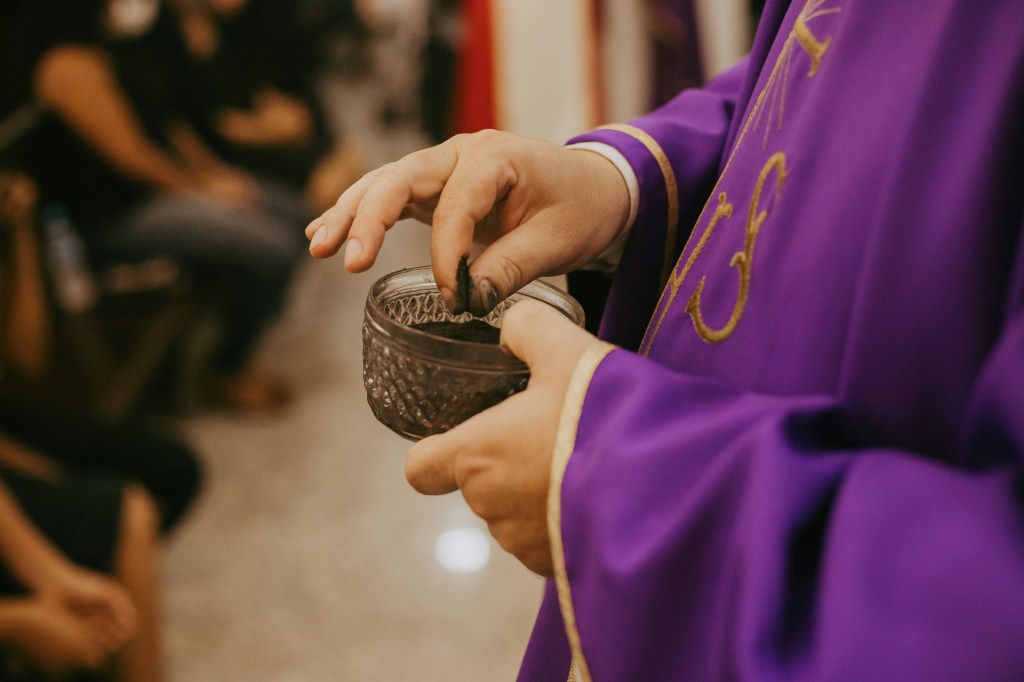
Photo by Thays Orrico on Unsplash

Posted in Moments and Musings

Lent: A Season of Redirection and Rest

As a born-again believer, Lent is not about ritual for ritual’s sake. It’s not about earning God’s favor or proving my devotion through sacrifice. Salvation has already been secured through Jesus Christ.

“For by grace you have been saved through faith, and that not of yourselves; it is the gift of God, not of works.” — Ephesians 2:8–9

Lent, for me, is about intentionality. It’s about creating space. It’s about laying something down so I can pick something greater up.

This year, I’m giving up social media—not as a rule to follow, but as a redirection of my heart.

Lent Is About Drawing Near

Scripture calls us to draw close to God:

“Draw near to God and He will draw near to you.” — James 4:8

But drawing near requires space. And if I’m honest, social media often fills the quiet spaces where God wants to meet me. The moments in line. The first minutes of the morning. The last minutes before bed. Instead of prayer, I scroll. Instead of reflection, I consume.

Lent gives me an opportunity to examine that.

“Let us lay aside every weight, and the sin which so easily ensnares us, and let us run with endurance the race that is set before us.” — Hebrews 12:1

Social media may not be sin in itself, but it can become a weight. And anything that distracts me from running fully after Christ is worth reevaluating.

Redirection: From Scrolling to Seeking

Fasting, biblically, is about dependence.

“Man shall not live by bread alone, but by every word that proceeds from the mouth of God.” — Matthew 4:4

When Jesus fasted in the wilderness, He wasn’t just abstaining—He was relying fully on the Father. In the same way, I’m choosing to fast from social media so I can redirect that time and attention to the Word of God.

Every urge to scroll becomes a reminder to pray.
Every moment of boredom becomes an invitation to worship.
Every quiet space becomes sacred.

“You will seek Me and find Me, when you search for Me with all your heart.” — Jeremiah 29:13

I want my heart to seek Him more than it seeks updates, notifications, and validation.

Mental Rest in a Noisy World

Social media is constant input—opinions, headlines, comparisons, trends. Even when it’s positive, it’s loud. And over time, that noise affects the mind.

“Be still, and know that I am God.” — Psalm 46:10

Stillness is hard to find when your mind is always processing content. Giving up social media for Lent is an act of mental rest. It’s stepping away from comparison culture. It’s quieting the voices so I can better hear His.

“You will keep him in perfect peace, whose mind is stayed on You, because he trusts in You.” — Isaiah 26:3

Perfect peace doesn’t come from disconnecting from the world alone—it comes from fixing our minds on Christ. But disconnecting from distraction can help us refocus.

Focusing More on Jesus

My life belongs to Jesus.

“I have been crucified with Christ; it is no longer I who live, but Christ lives in me.” — Galatians 2:20

Lent reminds me of the cross—of Christ’s sacrifice, His obedience, His suffering, and His victory. If He gave everything for me, surely I can surrender something small for a season to draw closer to Him.

Paul writes:

“That I may know Him and the power of His resurrection, and the fellowship of His sufferings.” — Philippians 3:10

That is my heart for this season—to know Him more. Not just intellectually, but intimately.

Less scrolling.
More Scripture.
Less comparison.
More contentment.
Less noise.
More Jesus.

It’s Not About Legalism—It’s About Love

Giving something up for Lent doesn’t make me more saved. It doesn’t make me more righteous. Only Christ does that.

But love responds.

“We love Him because He first loved us.” — 1 John 4:19

This fast is my response of love. It’s me saying, “Jesus, You are worth my attention. You are worth my time. You are better than distraction.”

And when Lent ends? Maybe I’ll return to social media. Maybe I’ll return with boundaries. Or maybe I won’t return in the same way at all. But I pray that after these forty days, my habits will reflect a heart more anchored in Christ.

“Set your mind on things above, not on things on the earth.” — Colossians 3:2

That’s the goal.

This Lent, I’m not just giving something up.
I’m making room.
I’m redirecting.
I’m resting.
And I’m fixing my eyes on Jesus.

“Looking unto Jesus, the author and finisher of our faith.” — Hebrews 12:2

Photo by Josh Applegate on Unsplash
Posted in Moments and Musings

Don’t Waste Your Art on Anger

There’s a quote from the 1989 film Dead Poets Society that has stayed with me for years. Robin Williams’s character says:

“Poetry, beauty, romance, love—these are what we stay alive for.”

That line has always rung true to me. Art, in all its forms, was never meant to be a weapon or a megaphone for outrage. Art is about meaning. It’s about connection. It’s about beauty. It’s about reminding us—especially in difficult seasons—why life is still worth living.

And yet, the longer I spend in online creative spaces, the more I see art being used for something else entirely.

Around 2020, as I became more active on social media, I intentionally sought out communities built around the things I love. I adore books, so bookstagram felt like a natural fit. I wanted to talk about stories, discover new authors, share what I was reading, and write about the books that moved me.

That’s not what I found.

Instead, I found politics. Anger. Rage. Cancel culture. Public shaming. Nastiness—often aimed at strangers. And it wasn’t limited to one side of the political spectrum. It was everywhere. The joy of reading, the beauty of storytelling, and the love of language were drowned out by outrage and moral grandstanding.

I lasted maybe two years before I was tired. Not just annoyed—tired. Spiritually tired. Creatively tired. Emotionally tired.

A couple of years ago, I tried again. This time, I stepped into the online craft community. Once more, I hoped to find inspiration, encouragement, and artists whose work would challenge me to grow. I even saw it as a way to market what I hope will someday be a thriving business.

But here I am again, considering stepping away.

Why?

Because once again, I’m watching people use their art to express anger and rage.

Before this is misunderstood, let me be clear: this is not a commentary on anyone’s personal politics, nor is it a declaration of my own. I am constantly soul-searching, praying, and thinking deeply about what I believe. What I do know is this—man-made politics will always be imperfect. Always. Only God reigns supreme, and only His ways are perfect.

I also believe—strongly—that someone can love God wholeheartedly, serve Him faithfully, and maintain a beautiful relationship with Him while voting differently than I do. And that’s okay. Differences without division. My pastor says that often, and it’s something I hold onto tightly.

People love to say, “Art is political.”

I disagree.

Art is only political if you make it political.

At its core, art is meant to be beautiful and precious. It’s meant to tell stories, stir the soul, and create something that didn’t exist before. It’s meant to point us toward hope, not deepen our despair. As Dead Poets Society so perfectly puts it, poetry, beauty, romance, and love are what we stay alive for.

What troubles me most, though, is the contradiction I keep seeing.

The same artists who repeatedly say, “I craft for my mental health,” often create nothing but anger and rage. If every piece is fueled by outrage, if every project exists to provoke or condemn, how is that healing? How is that restorative? Anger doesn’t disappear once the project is finished—it lingers. What we pour into our art shapes us in return.

To be clear, this isn’t an announcement that I’m shutting down my Instagram account or walking away from social media entirely. It is a conscious decision to be far more intentional about what I consume, what I engage with, and what I allow to influence my heart. Protecting my peace isn’t avoidance—it’s stewardship. Not every conversation deserves my energy, and not every creative space is healthy for my spirit.

Above all else, my objective remains unchanged: to love the way Jesus loves—everyone, and at all times. That means choosing grace over outrage, humility over hostility, and compassion over the need to be right. I don’t want my creativity—or my character—to be shaped by anger. I want it shaped by love.

So if that means fewer hours scrolling and more hours actually creating, I’m okay with that. If that means stepping back from spaces that thrive on judgment and rage, I’m okay with that too. I’ll gladly trade noise for beauty, outrage for peace, and endless commentary for meaningful creation.

I’ll probably spend more time on Pinterest. I’ll definitely spend more time making things—things that are lovely, thoughtful, and life-giving. Things that remind me why I fell in love with art in the first place.

Because poetry, beauty, romance, and love really are what we stay alive for. And I refuse to waste my art on anger.

Scripture reminds us, “Finally, brothers and sisters, whatever is true, whatever is noble, whatever is right, whatever is pure, whatever is lovely, whatever is admirable—if anything is excellent or praiseworthy—think about such things” (Philippians 4:8). That is the posture I want my art—and my life—to reflect. Not anger. Not rage. But beauty, truth, and love.

A Prayer

Lord,
Thank You for the gift of creativity and for the ability to make things that reflect beauty, truth, and love. Guard my heart from anger that hardens and outrage that distracts. Help me to be a good steward of the gifts You’ve placed in my hands and the voice You’ve given me.

Teach me to create from a place of peace rather than reaction, from love rather than fear. When the noise grows loud and division feels tempting, draw me back to what is good, what is lovely, and what brings life. Shape my art so that it points to You and reflects Your grace.

Most of all, help me to love as You love—freely, generously, and without condition. May my words, my work, and my choices honor You in both what I create and what I choose to lay down.

Amen.

Posted in Moments and Musings

My Word for 2026: Content

At the end of each year, God gives me a word to carry into the new one.
It’s not a goal or a resolution—it’s an invitation.
Something to focus on. Something to press into. Something to grow in.

For 2026, that word is content.

And no, I don’t mean content like social media posts or blog writing.
I mean content as a state of mind and heart.
Being at peace. Resting. Fully appreciating all God has done and living in the moment He’s placed me in.

This has been a lifelong struggle for me.

I’ve often lived with one foot in my current season and one foot in the next—always wanting more, better, different, or extraordinary. Always looking ahead. Always imagining what could be instead of fully receiving what is.

Scripture speaks directly to this tension:

“I know how to be brought low, and I know how to abound. In any and every circumstance, I have learned the secret of facing plenty and hunger, abundance and need. I can do all things through Him who strengthens me.”
Philippians 4:12–13

The peak of this struggle came when my granddaughter was born. Suddenly, I found myself deeply unhappy with some of my choices. All I could think about was her. All I wanted was to be near her. My heart ached with longing, and instead of bringing that ache to God, I let it settle into discontent.

I won’t sugarcoat it—I spent the better part of this year living in that headspace.

Until recently, when God very clearly told me to stop.
Not gently.
Not subtly.
But firmly—like only a loving Father can.

In that moment, I realized something painful but necessary: I wasn’t just making myself miserable. I was affecting the people around me. My restlessness was spilling over. My discontent was contagious.

So I cried out to God and asked for forgiveness.
And then I humbled myself and did the same with those closest to me.

That’s when God gave me my word.

He reminded me that everything I have, I once prayed for.
I asked Him to move mountains—and He did.
I begged Him for provision, stability, healing, and direction—and He answered.

So who was I to suddenly find fault with the very life I had laid at His feet?

“But godliness with contentment is great gain.”
1 Timothy 6:6

Is my life perfect? No.
But perfection was never promised here.

True perfection waits for us in Heaven.

“He has made everything beautiful in its time.”
Ecclesiastes 3:11

My life is relatively easy, and I am deeply grateful for that. I am blessed beyond measure, and I know—without a doubt—that God is not finished with me yet.

So while 2026 will be a big and busy year, it will also be a restful one—at least where my heart and emotional health are concerned.

I am choosing not to miss the moments God gives me because I’m too busy living five steps ahead. I want to be present. I want to notice the small things. I want to fully inhabit the season I’m standing in.

That doesn’t mean I won’t look ahead.

I will—wisely and prayerfully.

I’ll look ahead to seek God’s direction.
I’ll look ahead to plan.
I’ll look ahead knowing that every plan I make is ultimately placed back in His hands.

“In their hearts humans plan their course, but the Lord establishes their steps.”
Proverbs 16:9

But more than anything, I want to be here.
Right now.
Right where God has me.

Right in the center of His will.

A Gentle Reflection for You

As you look toward a new year, I invite you to ask yourself:

  • Where have I been restless instead of grateful?
  • What prayers has God already answered that I may be overlooking?
  • What would it look like to rest—not in circumstances—but in God’s faithfulness?

Maybe God has a word for you too.
Maybe it’s content.
Maybe it’s something else entirely.

Whatever it is, I pray you’ll listen—and lean in.

Because there is deep peace found when we stop striving for the next thing and start trusting God with this one.

“Keep your lives free from the love of money and be content with what you have, because God has said, ‘Never will I leave you; never will I forsake you.’”
Hebrews 13:5

If this resonated with you, I’d love to hear—what word are you carrying into the new year? 💛

Photo by fotografu on Unsplash