Posted in Moments and Musings

Just Sophia

Every time a child is born, families gather around and almost immediately begin comparing. Who does the baby look like? The mother or the father? Someone points out the eyes, another notices the nose, and before long the room is filled with opinions and laughter. It’s almost instinctive, this need to trace a child back to someone else, as if resemblance helps us understand where they belong. In a way, it feels like we’re all trying to claim a small piece of this brand-new person before we even know who they are.

I did the same thing.

When Sophia was born, I found myself searching for familiarity. I pulled up baby pictures of Emilie and studied them side by side, holding them next to each other and scanning for similarities. In those early days, it’s hard to tell—most babies look pretty much the same in the infancy stage. Soft faces, rounded cheeks, features that haven’t yet settled into anything distinct. At that stage, you’re mostly guessing.

But as Sophia grew out of that newborn look and into her baby face, things became clearer. Her features began to take shape, and it was obvious that she favored her father. The resemblance wasn’t subtle. Still, there were moments—certain expressions, tiny mannerisms, a look in her eyes—that reminded me of Emilie. Those moments felt important, like little confirmations that I was seeing something meaningful.

It’s such a common thing for families to do, and I commented on it often. I’d joke with Emilie, saying things like, “Sorry, she looks exactly like her father.” We laughed about it more than once. It felt harmless and lighthearted, just part of the way people talk about babies. No deeper meaning intended. Just conversation.

Then one day, during a similar exchange, Emilie said something that stopped me completely.

“She looks like Sophia to me,” she said. “Just Sophia. And that is all.”

That is all.

Her words lingered in the air long after the conversation moved on. At first, I wondered if I had unintentionally hurt her feelings with all the comparisons that seemed to leave her out. I replayed past comments in my head, questioning whether they landed differently than I meant them to.

But that wasn’t it at all.

She wasn’t offended. She wasn’t correcting me. She was simply stating a truth—plain, uncomplicated, and confident.

And the more I thought about it, the more I realized it was the same truth I’ve spoken over my own girls for years. Emilie looks like Emilie. Shelby looks like Shelby. Neither one looks exactly like me or their dad, and honestly, they don’t even look much like each other. Their connection isn’t found in identical features or shared expressions. They are connected by love, by history, by the life they’ve grown together—not by carbon-copy appearances.

Since overthinking is my superpower, I sat with Emilie’s words longer than most people probably would. I let them settle in my heart and mind, turning them over again and again. That reflection led me to Psalm 139:13–16—a passage that speaks so clearly about God’s intentional design.

It reminds us that God forms us carefully and purposefully, knitting us together with precision and love. That we are fearfully and wonderfully made, not accidentally assembled or loosely imagined. There is no other Vikki like me on this planet. Not one. That’s how intentional God is. Uniquely chosen. Uniquely made.

So when Emilie said, “She just looks like Sophia to me,” something clicked.

Of course she does.

Because there has never been—and never will be—another Sophia exactly like her. She doesn’t need to resemble anyone else to be worthy, to belong, or to be known. Whatever God has planned for her will be just as unique as the way she was created, shaped by a purpose meant only for her.

And maybe that’s the quiet lesson hidden beneath all those well-meaning family comparisons. Before we rush to decide who someone looks like, before we search for reflections of ourselves in them, we should pause. Long enough to see them fully. Long enough to recognize that they don’t need to resemble anyone else to be complete.

Sometimes, the most beautiful thing we can say about a person is simply this:
They look like themselves. And that is all.
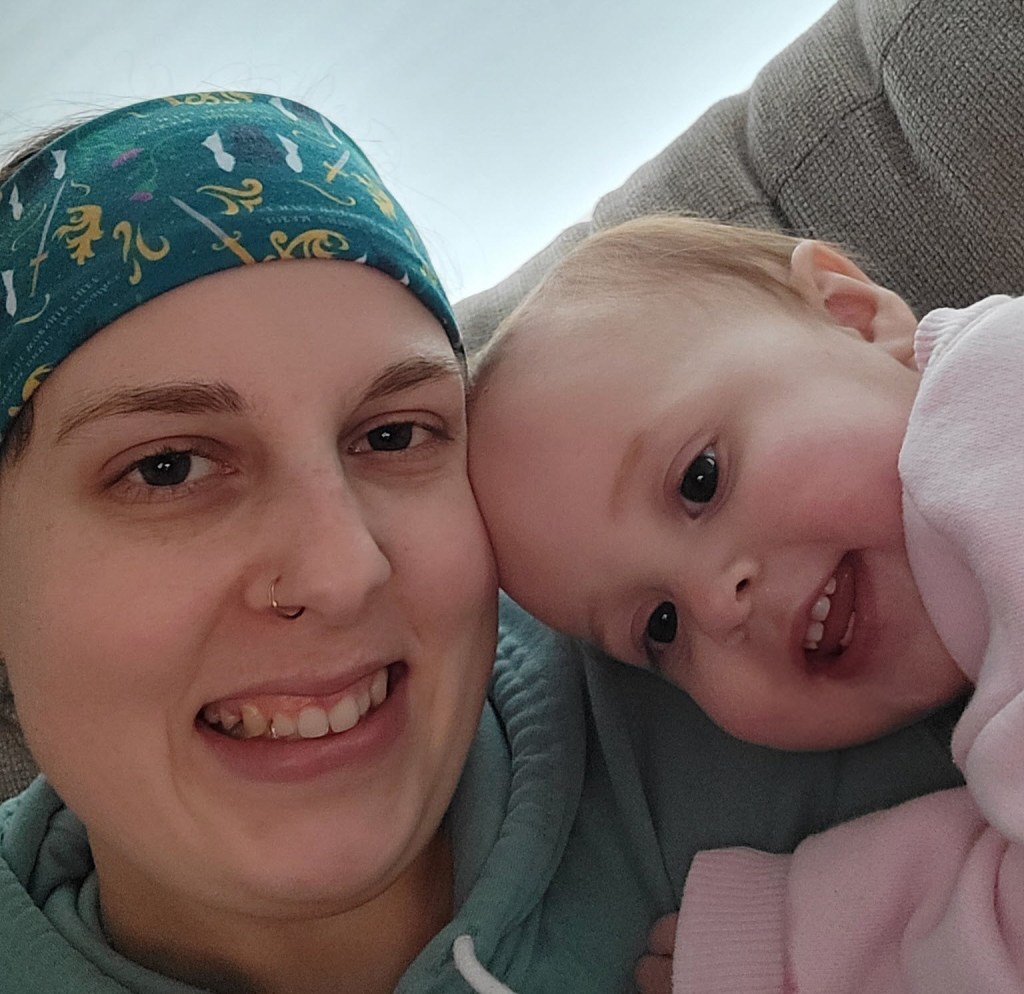
Photo by me. @vikkilynnsorensen. All rights reserved.
Posted in Moments and Musings

Seen, Known, and Included

This past Sunday, my church held one of those services that stays with you long after it ends. It was a time of anointing with oil, prayer, and words spoken over individuals—words filled with encouragement, affirmation, and God’s tenderness. Even watching online, I could feel the weight and beauty of the moment. The Holy Spirit doesn’t recognize distance, after all.

Because I live more than an hour away, I attend church virtually. I’m grateful for technology, but I’ll be honest—there are moments when watching from a screen can stir a quiet ache. I’m not physically in the room. I’m not standing at the altar. I’m not being anointed or prayed over in the same visible way. And yet, this Sunday reminded me of something deeply important: God is not confined to buildings, stages, or proximity.

As each person went forward and received a word, I found myself rejoicing with them. Truly rejoicing. I felt joy rise up as I watched my brothers and sisters be seen, encouraged, and loved. And then I noticed something else—something subtle but significant.

There was no jealousy in my heart.

That realization stopped me in my tracks, because it hadn’t always been that way.

There was a time when moments like this would have been painful for me. I would have smiled on the outside while quietly shrinking on the inside. I’d think, Why not me? I’d convince myself that God must have forgotten about me or placed me on some invisible list of people who were just… missed. I believed blessings were handed out to those who were better, stronger, more faithful, more put-together.

I assumed I simply didn’t measure up.

But as I watched and rejoiced this time, I sensed God’s gentle voice speak into my heart—not loud or dramatic, but kind and sure:

“Yes, daughter. Take those words for yourself. I know your heart. I see you. What is being spoken over them is for you too.”

I can’t fully explain what that did to me.

In that moment, it felt like God reached right through the screen and straight into my soul. He wasn’t correcting me; He was inviting me. Inviting me to receive without striving. Inviting me to stop disqualifying myself. Inviting me to believe that His love and affirmation are not scarce resources.

Scripture tells us, “The eyes of the Lord range throughout the earth to strengthen those whose hearts are fully committed to Him” (2 Chronicles 16:9). Not those who are perfect. Not those who are visible. Not those who live closest to the church building. Those whose hearts are His.

For far too long, I’ve carried a quiet belief that something about me was fundamentally wrong. That “wrong” followed me like a shadow. I assumed I was always falling short, always behind, always watching others receive what I could only hope for. I compared myself to people who seemed to do everything right, who always had answers, who never appeared to struggle.

But comparison is a heavy burden, and God never asked us to carry it.

Thankfully, that is not how God works.

God does not measure us the way the world does. He does not withhold goodness until we perform well enough. He is not waiting for us to fix ourselves before He loves us. Scripture reminds us, “But God shows His love for us in this: while we were still sinners, Christ died for us” (Romans 5:8).

That truth changes everything.

I am not seen through the lens of my failures, my doubts, or my past. I am seen through the blood of Jesus. Because of Christ, I am fully accepted, fully forgiven, and fully loved. “In Him we have redemption through His blood, the forgiveness of sins, in accordance with the riches of God’s grace” (Ephesians 1:7).

There is no hierarchy in God’s family. No favored children and forgotten ones. No inner circle and outer edges. We are all equally known and deeply loved.

“For the Lord your God goes with you; He will never leave you nor forsake you” (Deuteronomy 31:6).

What a comfort that is.

What a gift it is to realize that God sees the quiet ones, the unseen ones, the ones watching from a distance. He sees the heart that longs for Him. He sees the tears no one else notices. He sees the faith that keeps showing up—even online—even from far away—even when it feels small.

And He calls us His.

“See what great love the Father has lavished on us, that we should be called children of God! And that is what we are” (1 John 3:1).

If you’re reading this and recognizing yourself in these words—if you’ve ever believed that blessings were for everyone else, that you were somehow overlooked or forgotten—I want you to hear this clearly: you are not invisible to God. You are not an afterthought. You are not disqualified.

Sometimes the words spoken over others are also an invitation for us to receive by faith. To say, Yes, Lord, I’ll take that too. To believe that what God is doing in the room, He is also doing in us.

You are seen.
You are known.
You are deeply loved.

And in God’s Kingdom, there is more than enough grace to go around.